Research

We study how extreme wind loads structures and how to make them survive it, from large-scale physical testing, through machine-learning-accelerated simulation, to vibration control. The same methods carry across civil, mechanical, and aerospace engineering: fluid–structure interaction and aeroelastic testing, structural and nonlinear dynamics, and smart (semi-active) structural control. Every project, with photos and videos, is on the Projects page. Technical terms are defined in the wind engineering glossary.

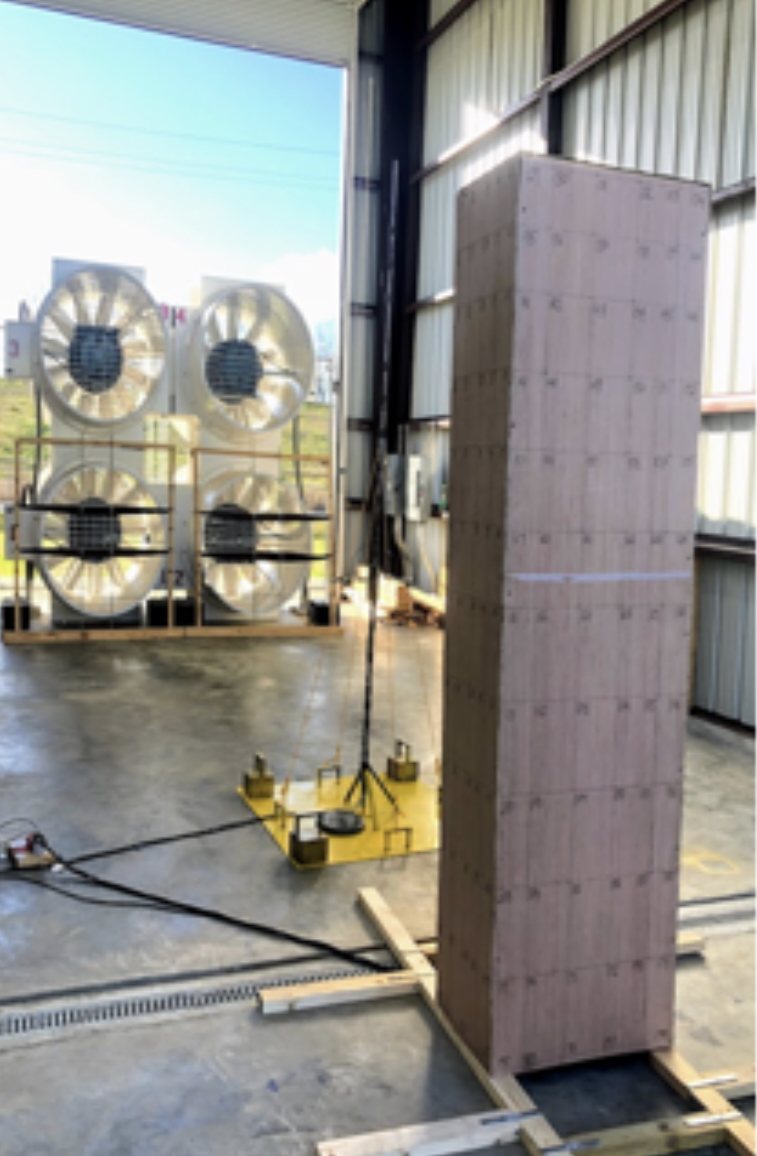
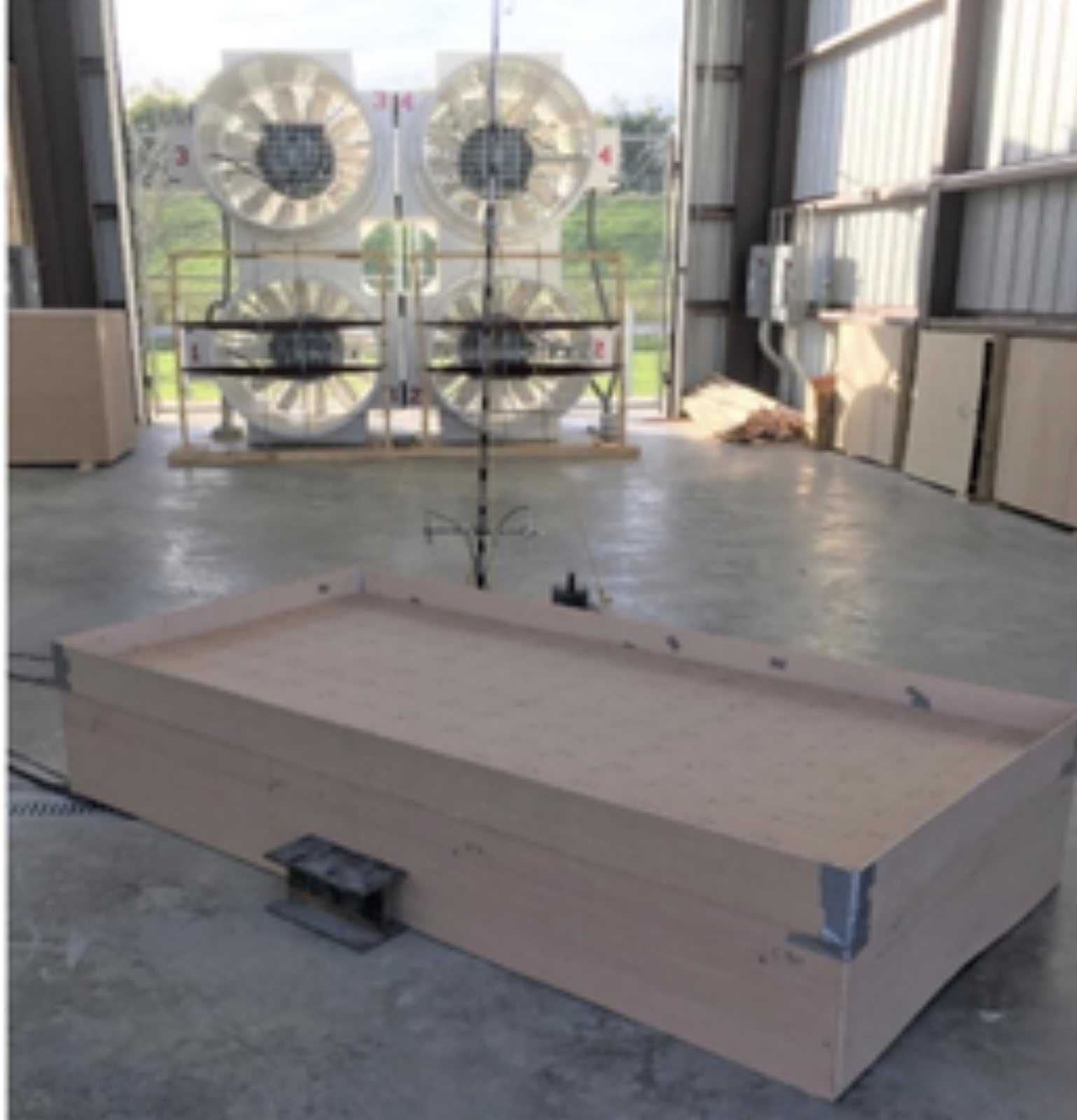
A large-scale low-rise building model in front of the open-jet fan array

Large-scale open-jet testing

Most wind-tunnel tests use small models, typically 1:500 to 1:100 for large structures, in flows that lack the large, low-frequency eddies of real storms, which can understate the peak loads that damage roofs and cladding. The group's earlier studies identified geometric scale and inflow turbulence as key factors in that gap, which led to the LSU WISE open-jet facility (built in two phases): a wall-free jet with a 4 m by 4 m test section that reproduces complete atmospheric boundary-layer turbulence at Reynolds numbers up to 2.3 × 106, depending on the test model, with integral length scales about ten times those of conventional small-scale testing. It supports testing of buildings, solar arrays and other renewable energy installations, wind turbines, bridges, and power transmission lines.

What we found

Also in this area

Boundary-layer wind tunnel testing; the effect of model scale and inflow turbulence on peak loads (Solar Energy, 2016); internal pressures in buildings with openings and sudden breaching (Wind and Structures, 2013); wind-induced response of tall buildings by pressure integration (Alexandria Engineering Journal, 2013); aerodynamic and aeroelastic wind tunnel studies of Milan's CityLife towers at Politecnico di Milano; and wind-tunnel and full-scale tests of trees for vegetated building envelopes (Wind and Structures, 2013). Before LSU, Dr. Aly calibrated the flow-production machines of Florida International University’s Wall of Wind for full-scale hurricane testing and first-authored its design paper (ASCE-EMI Special Publication, 2013).

In pictures
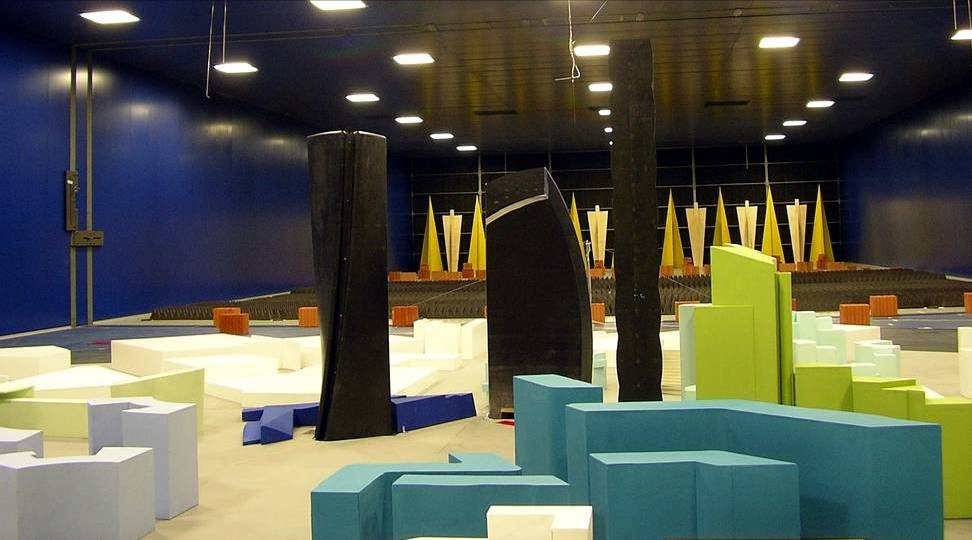
CityLife tower models (1:100), Politecnico di Milano wind tunnel
A 1:50 high-rise building model with pressure taps in the open jet
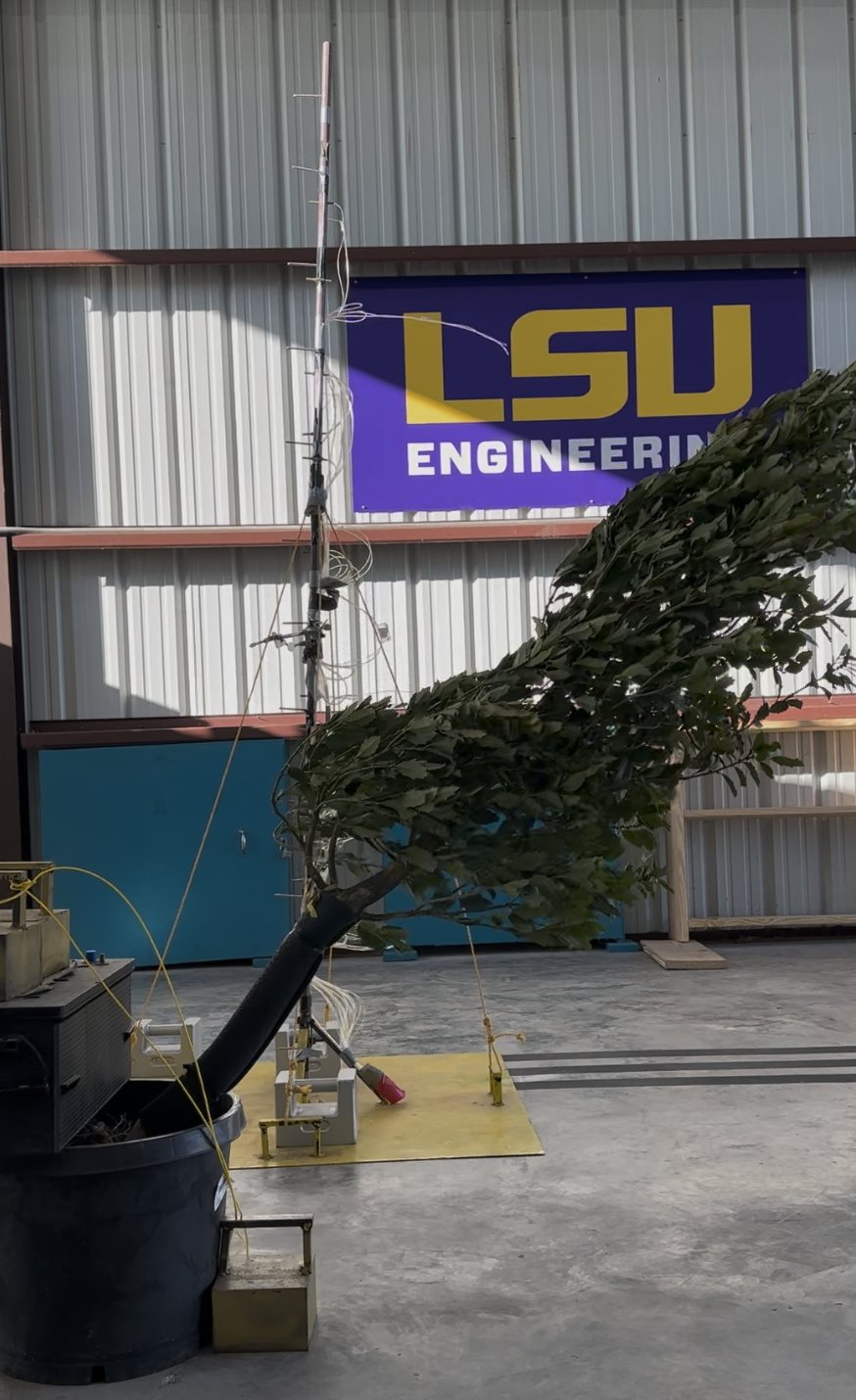
A full-size tree bending in high wind in the open jet
Destructive testing at high wind speed
Large-eddy simulation of flow over a forward- and backward-facing step, colored by velocity magnitude; LES like this trained the machine-learning turbulence model
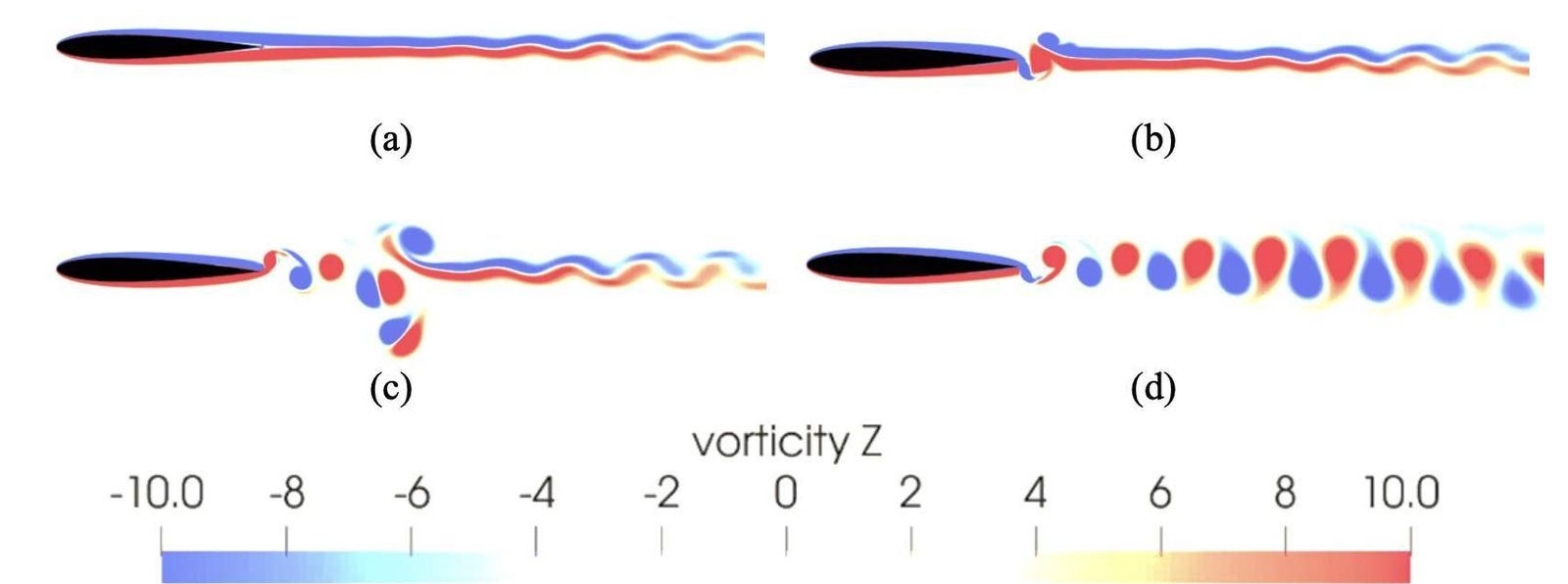
Wake evolution behind a pitching NACA0012 airfoil, from the first pitch to a developed wake (Aly and Medina, AIAA Journal, 2026)

Aerodynamics, CFD, and machine learning

We use large-eddy simulation (LES) and Reynolds-averaged (RANS) models to compute wind flow around buildings, bridges, solar arrays, and airfoils, and machine learning to make those simulations faster and more accurate. Part of this work began during Dr. Aly's U.S. Air Force Research Laboratory Summer Faculty Fellowships (2022 and 2023), computational residencies that integrated machine learning with OpenFOAM.

What we found

  • Machine learning coupled with CFD predicts wind loads on solar panels up to 10,000 times faster than conventional CFD, with accuracy preserved, and identified −15° as the optimal stow angle for a single-axis solar tracker during wind events (Sustainable Cities and Society, 2023).
  • A deep-learning model trained on LES data improves eddy-viscosity predictions in RANS simulations of wind pressures on bluff bodies, especially in separation zones; the trained model ran in about 6 minutes, against about 24 minutes for k-ε, 45 minutes for k-ω SST, and 182 hours for LES (Journal of Applied Fluid Mechanics, 2024).
  • For pitching and plunging airfoils, higher motion frequencies increase thrust, thinner airfoils generate more thrust, pivot locations near the leading edge are favorable, and an upstream vortex produces sharp lift transients (AIAA Journal, 2026).
  • An interpolation approach that reuses inflow data across grids lowers the cost of LES without loss of fidelity (Journal of Building Engineering, 2021).
  • A sole-authored perspective on how machine learning is reshaping CFD accuracy and speed (Fluids, 2025).

Also in this area

Large-eddy simulation of peak roof pressures on low-rise buildings, compared with full-scale and wind-tunnel data (Wind and Structures, 2020); CFD of scour countermeasures, in which flow attachments such as a delta vane reduced bed shear stress at bridge piers and monopile foundations (Ocean Engineering, 2021), and LES of pier scour (Journal of Applied Fluid Mechanics, 2023); and urban heat island mitigation through building geometry (Theoretical and Applied Climatology, 2022).

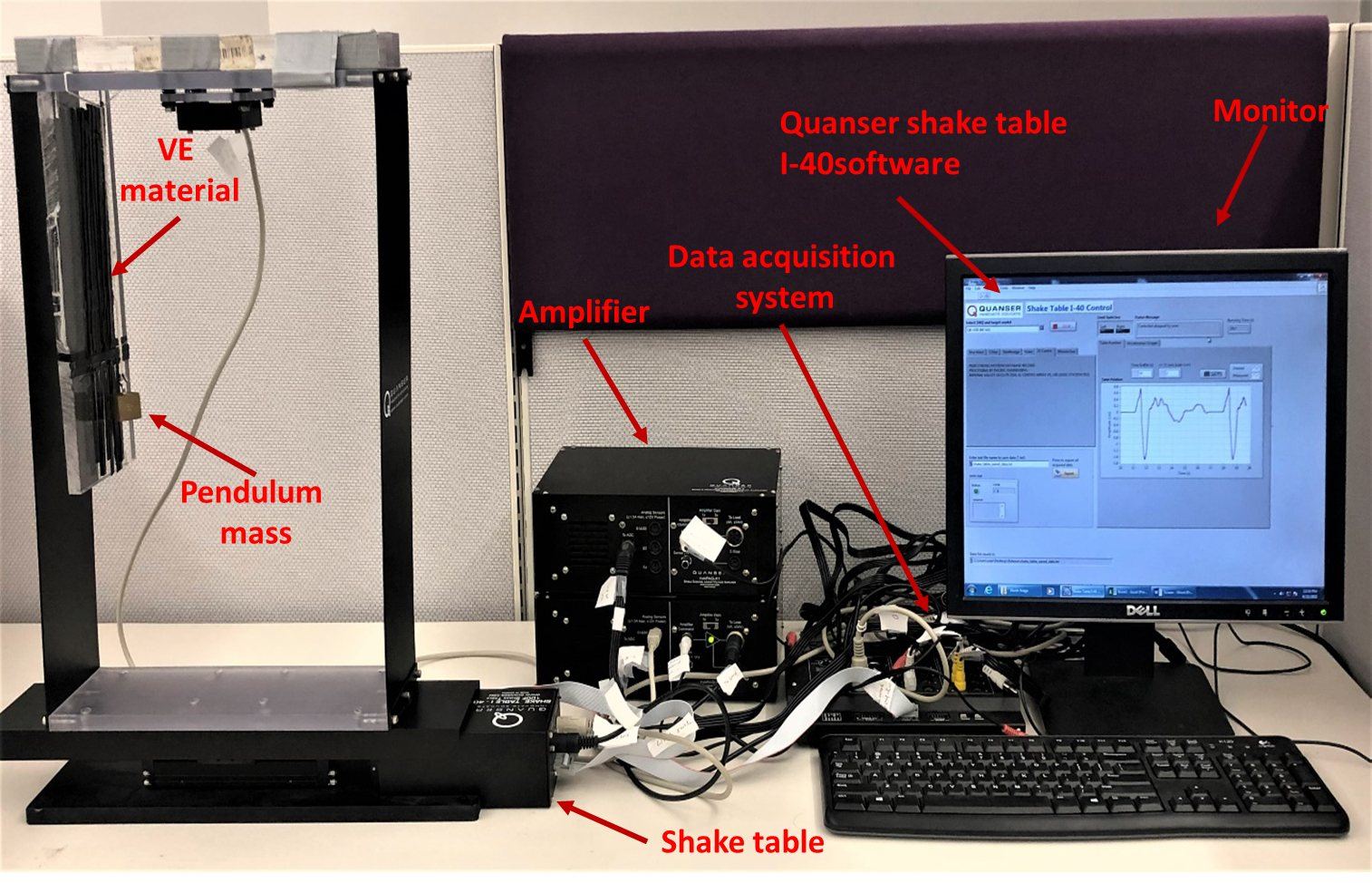
Shake-table test of the tuned pendulum pounding mass damper: pendulum mass, viscoelastic pounding material, and data acquisition

Structural dynamics, smart structures, and control

Tall buildings, wind turbines, and slender structures can vibrate excessively under wind and earthquakes. We design passive, semi-active, and active control systems, from tuned mass dampers to magneto-rheological (MR) smart dampers, and develop the theory to tune them.

What we found

Also in this area

An energy-based probabilistic approach to smart-damper efficacy (Smart Materials and Structures, 2008); fast hybrid testing of controlled smart dampers on nonlinear structures (Arabian Journal for Science and Engineering, 2014); MR dampers with lever mechanisms and bracing for tall buildings (The Structural Design of Tall and Special Buildings, 2011); robust tuned mass dampers under multidirectional wind (The Structural Design of Tall and Special Buildings, 2014); and vibration control of traffic mast arms (Experimental Techniques, 2021).

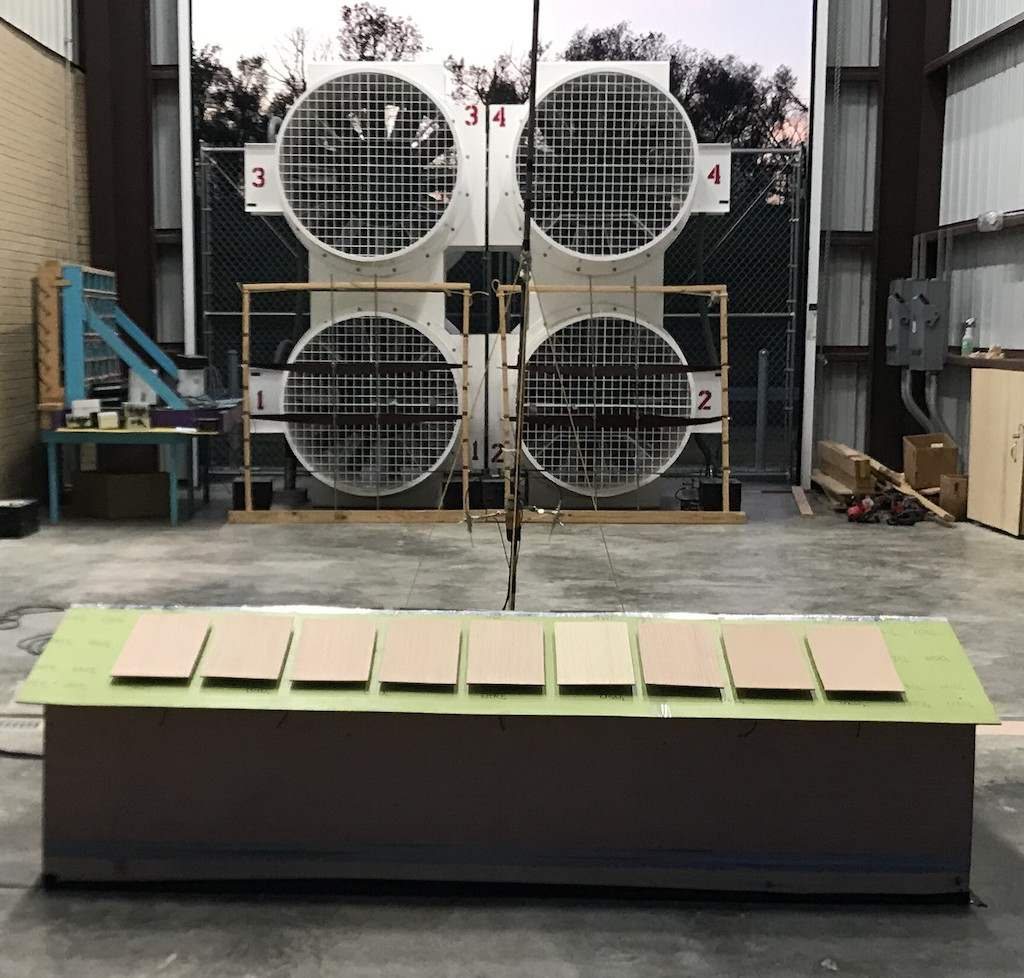
A low-rise building model with rooftop solar panels in front of the open-jet fan array

Wind-resilient solar, agrivoltaics, and wind energy

Solar arrays, solar trackers, agrivoltaic systems, and wind turbines are being built in hurricane-prone regions where design guidance for wind loads is limited. We measure and model their wind loads and dynamic response so they can be designed to survive.

What we found

  • Rooftop PV arrays reduced total wind-induced forces on a low-rise gable roof by 45–63% (Sustainable and Resilient Infrastructure, 2023).
  • In a solar-farm case study from Hurricane Maria, rebuilding raised costs by 50%, while accounting for accurate wind loads in the original design would have raised initial costs by only 2% (white paper, 2025).
  • In large-scale open-jet tests on a mono-slope roof building, a rooftop solar panel did not increase wind forces and reduced the pressure at the roof’s leading edge by 40%.
  • Geometric scale is a primary source of discrepancies in measured peak wind loads on solar panels (Solar Energy, 2016).
  • A review of agrivoltaic systems (Sustainability, 2024) and a structural and wind-dynamics approach to agrivoltaic resilience (Frontiers in Horticulture, 2026).

Also in this area

Doctoral research on torsional galloping, an aeroelastic instability, of single-axis solar trackers (2026) and machine-learning prediction of wind-turbine blade fatigue (Structural Durability & Health Monitoring, 2024); vibration and fatigue mitigation for wind turbines; and hydro-aero coupling in floating offshore wind turbines (Journal of Structural Design and Construction Practice, 2024), building on Dr. Aly's offshore wind turbine experiments at Western University's Boundary Layer Wind Tunnel Laboratory (2012–2013).

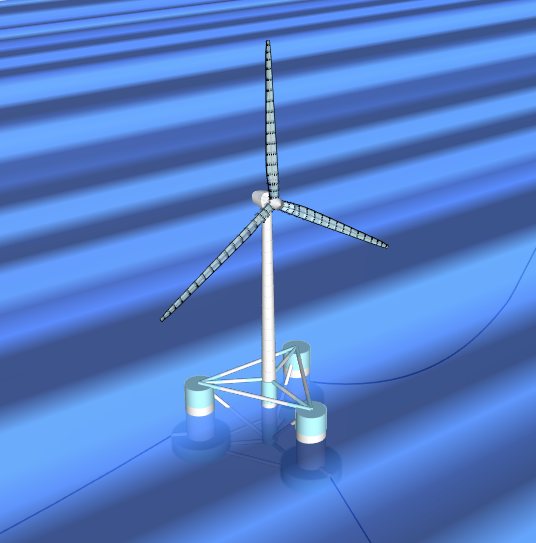
A floating offshore wind turbine under wind and waves
A floating offshore wind turbine under wind and waves (illustration from the 2024 review)

Wind, waves, and water

Offshore wind turbines and coastal infrastructure face wind and water together. At Western University’s Boundary Layer Wind Tunnel Laboratory, Dr. Aly designed and ran experiments on offshore wind turbines (2012–2013), and the group’s CFD work extends to the water flows that scour foundations.

What we found

Also in this area

Vibration of wind turbines under combined wind, wave, and earthquake loading, under Structural dynamics.

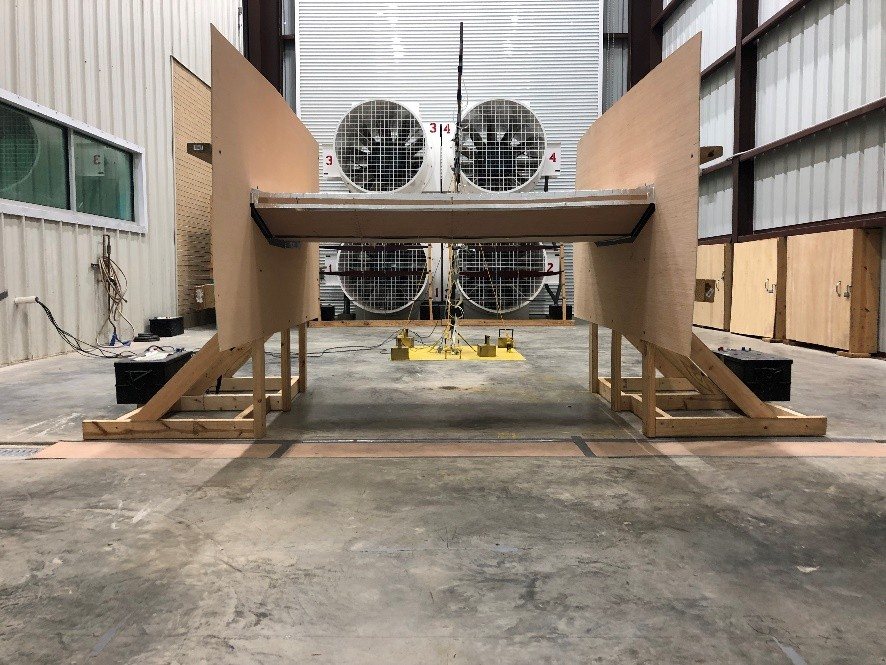
A bridge-deck sectional model in front of the open-jet fan array

Transportation infrastructure

  • An overheight vehicle impact avoidance and incident detection system (U.S. Patent 12,049,233 B2, 2024), which grew out of a case study on protecting bridges against overheight vehicles; in that study, a sandwich sacrificial cushion of high-impact rubber reduced the girder's lateral deflection by 89% and cut stresses in the girder's bottom flange and the vehicle's top by 82% and 25% (Steel and Composite Structures, 2022).
  • Wind-induced vibration of traffic mast arms (Experimental Techniques, 2021) and wind loads on overhead sign structures (Applied Sciences, 2023).
  • Bridge aerodynamics with open-jet testing, Reynolds-number effects, and green-energy integration (Wind, 2025).

Work with us

We welcome collaboration with agencies, companies, and researchers on large-scale wind testing, CFD and machine learning, and structural control. Prospective Ph.D. and M.S. students are encouraged to get in touch.

Email Dr. Aly